
How do you win chess in 4 moves? White can attempt the Scholar’s Mate with the sequence 1. e4 e5 2. Bc4 Nc6 3. Qh5 Nf6?? 4. Qxf7#. It only succeeds if Black makes inaccurate defensive moves and is mainly effective against beginners.

How to Win Chess in 4 Moves (Scholar’s Mate)
Want to know how to win a chess game in just four moves?
The fastest beginner checkmate is called Scholar’s Mate. It is a classic opening trap where White attacks the weak f7 square using the queen and bishop.
Although it only works when Black makes mistakes, it is one of the first checkmates every new chess player should learn.
Quick Answer: White can attempt Scholar’s Mate with 1.e4 e5 2.Bc4 Nc6 3.Qh5 Nf6?? 4.Qxf7#. It succeeds only if Black does not defend correctly.
What Is Scholar’s Mate?
Scholar’s Mate is the most famous four-move checkmate in chess.
It attacks the f7 pawn, which at the start of the game is protected only by the king.
When Black overlooks the attack, White delivers checkmate with the queen.
How to Win Chess in 4 Moves (Step by Step)
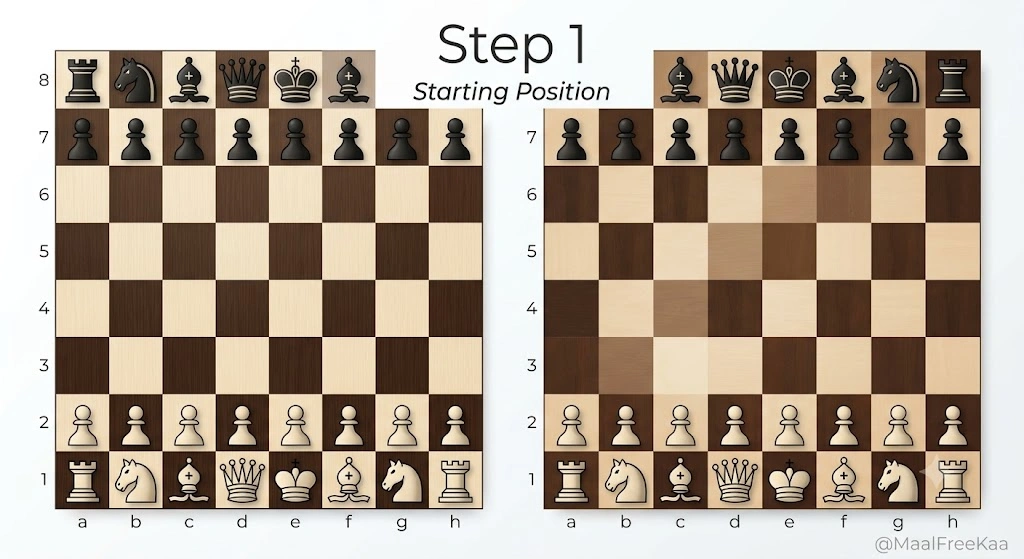
Move 1
White:
e4
Black:
e5
White immediately opens the bishop and queen.
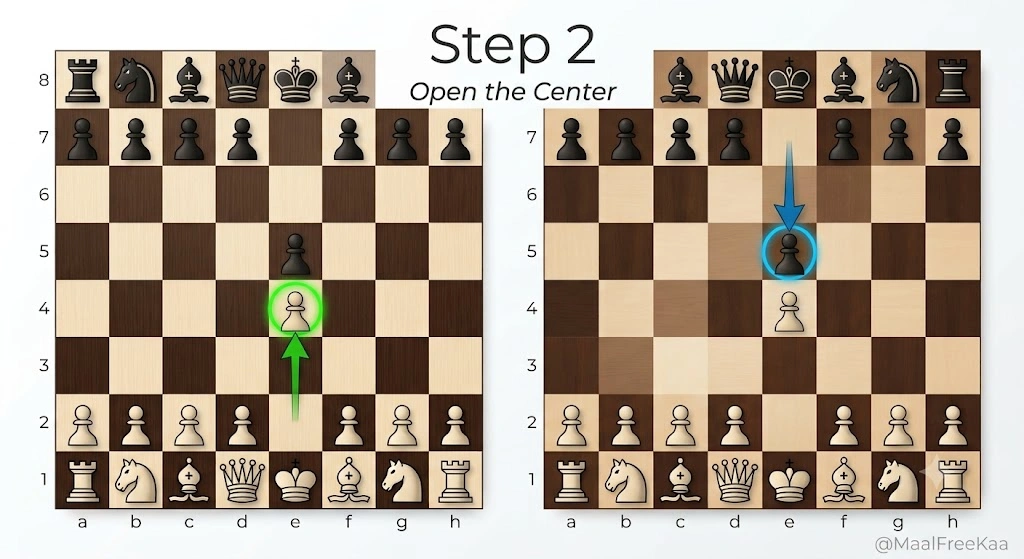
Move 2
White:
Bc4
Black:
Nc6
The bishop now attacks the weak f7 square.
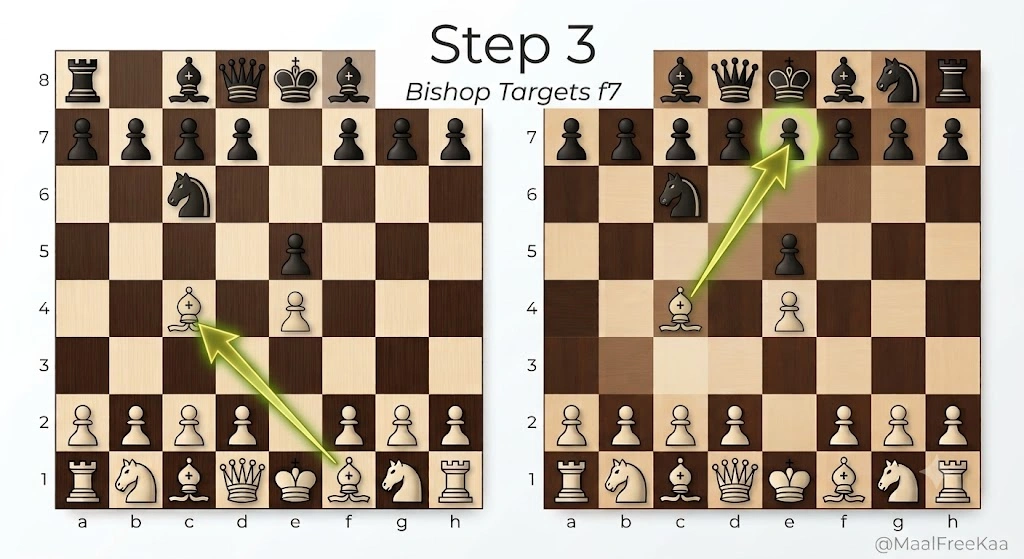
Move 3
White:
Qh5
Black:
Nf6??
The queen joins the bishop in attacking f7.
If Black ignores the threat, White wins.
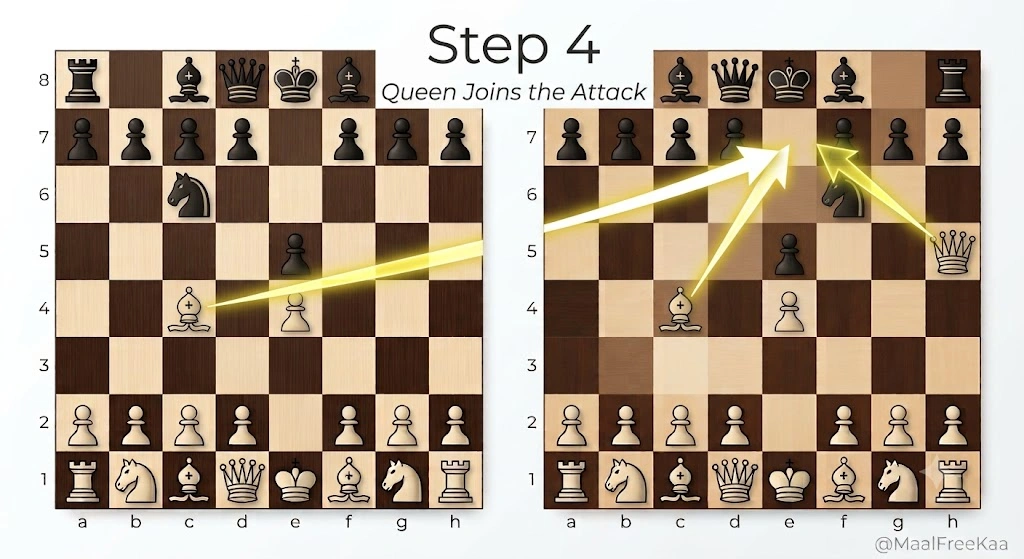
Move 4
White:
Qxf7#
Checkmate.
The king has no legal escape squares.
Congratulations—you’ve performed the famous Scholar’s Mate.
Why Does This Work?
The attack succeeds because:
- f7 is defended only by the king
- Queen and bishop attack together
- Black ignores the mating threat
- Beginners often focus on developing pieces instead of defending
Can You Always Win Chess in 4 Moves?
No.
Good chess players know this trap and defend against it easily.
Scholar’s Mate mainly works against beginners.
Can Black Win in 4 Moves?
No.
Black cannot force a guaranteed four-move checkmate from the starting position if White plays correctly.
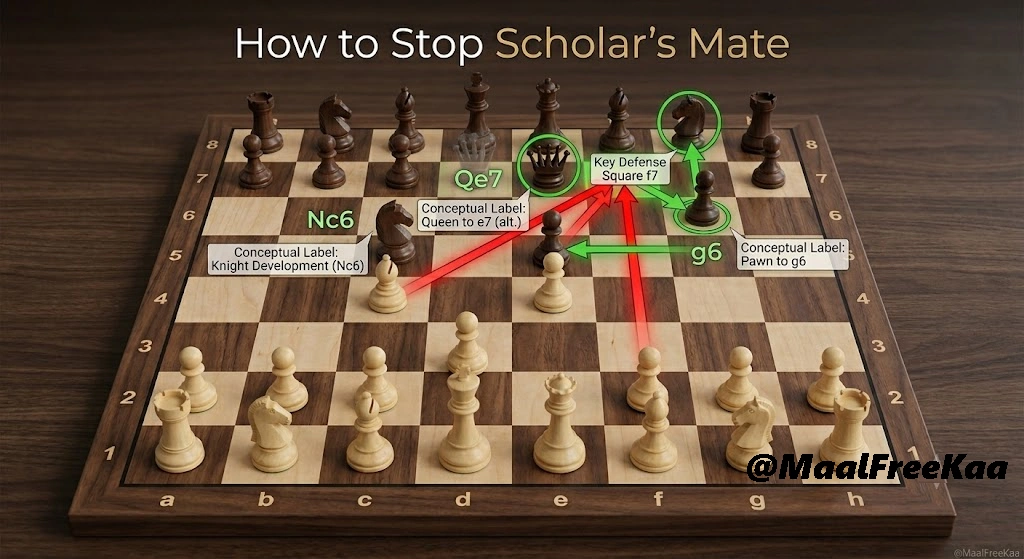
How to Stop Scholar’s Mate
If you are playing Black, defend by:
- Developing your knight correctly
- Protecting the f7 square
- Playing g6 if needed
- Watching White’s queen early
Experienced players almost never lose to Scholar’s Mate.
Common Beginner Mistakes
- Bringing the queen out too early without purpose
- Ignoring attacks on f7
- Forgetting to develop pieces
- Not controlling the center
- Missing checkmate threats
Practice Position
Move sequence:
- e4
- e5
- Bc4
- Nc6
- Qh5
- Nf6??
- Qxf7#
Practice this pattern several times until you recognize the attack instantly.
Is Scholar’s Mate Good?
Yes—for learning tactical ideas.
No—for regular competitive games against experienced opponents.
It is best used to understand:
- Checkmate patterns
- Piece coordination
- Weak squares
- Tactical vision
Quick Answer: How to Win Chess in 4 Moves
The Scholar’s Mate (4-Move Checkmate): Move your king’s pawn to e4, develop bishop to c4, bring queen to h5, then capture f7 for checkmate. This attacks the weak f7 square defended only by Black’s king.
How to Win Chess in 4 Moves? Discover the fastest way to win a game of chess using the 4-move checkmate, also known as the Scholar’s Mate. This strategy is perfect for beginners looking to surprise their opponents.
Chess, a game revered for its complexity and strategy, can also offer swift victories when approached with the right moves.
The 4-Move Checkmate Sequence:
- e4 (King’s pawn advances two squares)
- Bc4 (Bishop targets f7 square)
- Qh5 (Queen adds pressure to f7)
- Qxf7# (Queen captures f7, delivering checkmate)
Understanding the Scholar’s Mate
The Scholar’s Mate targets the weak f7 square, aiming to deliver checkmate in just four moves. It’s a common tactic among beginners and serves as a great learning tool.
How to Win Chess in 4 Moves Easy step guide:
1st Steps: Advance the Pawn (e5)
The start way to a 4 move checkmate begins with a bold move advancing the pawn in front of your king by two squares to e5. This seemingly innocent move serves a dual purpose. It opens up pathways for your queen and bishop while also putting pressure on the center of the board.
2nd Steps: Develop the Bishop (c4)
With the foundation laid in the first move, the second move involves developing your bishop to c4. Placing your bishop on this square exerts influence on the critical f7 square, which is a key vulnerability in your opponent’s setup. This strategic move sets the stage for the impending checkmate.
3rd Steps: Queen’s Move (f3)
The third move introduces the queen into the equation. Move your queen to f3, creating a direct threat to the vulnerable f7 square. This move not only intensifies the pressure on your opponent but also sets the stage for a swift checkmate.
4th Steps: Deliver the Checkmate (Qf7#)
The final move is the coup de grâce. With your queen positioned on f3 your opponents options are limited. If they make the common mistake of playing g6 you seize the opportunity to deliver checkmate with the queen on f7 a move that leaves the opponent with no escape.
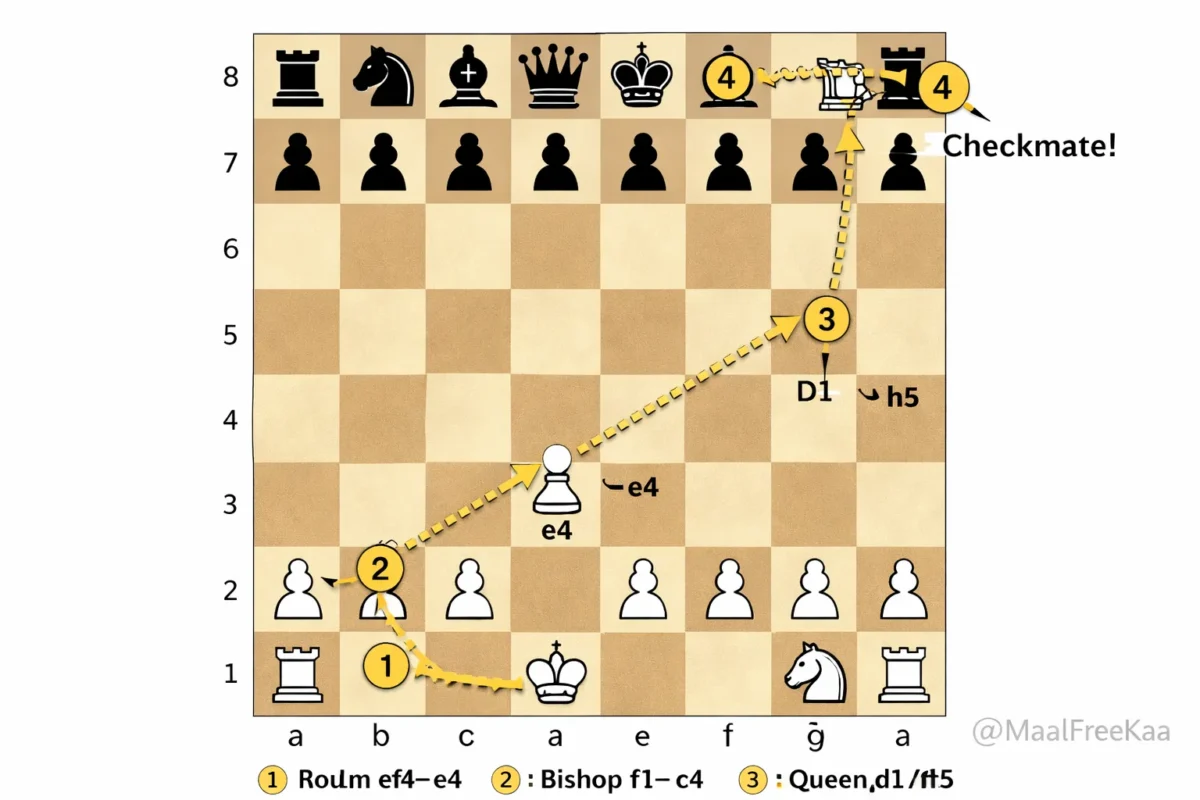
Step-by-Step Guide
- e4: White opens by moving the king’s pawn two spaces forward.
- e5: Black responds similarly.
- Qh5: White brings out the queen, targeting the f7 pawn.
- Nc6: Black develops the knight, a common response.
- Bc4: White develops the bishop, adding pressure to f7.
- Nf6: Black develops the other knight.
- Qxf7#: White captures on f7, delivering checkmate.
Defending Against the Scholar’s Mate
To prevent falling victim to this tactic:
- g6: Fianchetto the bishop to protect f7.
- Qe7: Defend the f7 square directly.
- d6: Prepare to develop the dark-squared bishop and control the center.

Practice Makes Perfect
Use online chess platforms to practice this strategy and its defenses. Familiarity will help you recognize and counter it in real games.
Some Chess 4 Move Win Key Takeaways:
- Surprise Factor: The beauty of the four-move checkmate lies in its surprise factor. Many opponents may not anticipate such a swift conclusion to the game.
- Adaptability: While the Scholar’s Mate is a powerful strategy, be prepared to adapt to opponents who are familiar with this tactic. Anticipate variations and responses to maintain your edge.
- Practice Makes Perfect: Like any chess strategy, mastering the four-move checkmate requires practice. Engage in simulated games, analyze your moves, and refine your execution.
How to Win Chess in 4 Moves Advance Tricks:
The 4 Move Checkmate
- Move 1: Advance the Pawn (e5): As the player playing white, start by moving the pawn in front of the king two squares forward (e4). This opens up a path for your queen and bishop.
- Move 2: Develop the Bishop (c4): Bring out your bishop to c4, putting pressure on the f7 square. This move is a critical part of the setup.
- Move 3: Queen’s Move (f3): Move your queen to f3, creating a direct threat to the vulnerable f7 square. This move sets the stage for the impending checkmate.
- Move 4: Deliver the Checkmate (Qf7#): Your opponent’s options are limited and if they make an uninformed move like g6, you can swiftly checkmate with the queen on f7.
How to Win Chess in 4 Moves Practice and Patience
- Consistency in Learning: Improvement in chess requires consistent practice. Develop a routine that enhances your skills over time.
- Analyzing Past Games: Reviewing your games and understanding your mistakes is a vital part of the learning process. Learn from every move.
The Power of Sacrifice How to Win Chess in 4 Moves
- Sacrificing for Positional Advantage: Strategic sacrifices can catch your opponent off guard. Discover when and how to sacrifice for a superior position.
- Calculated Risks: Chess is a game of calculated risks. Learn the art of taking risks that tilt the game in your favor without jeopardizing your position.
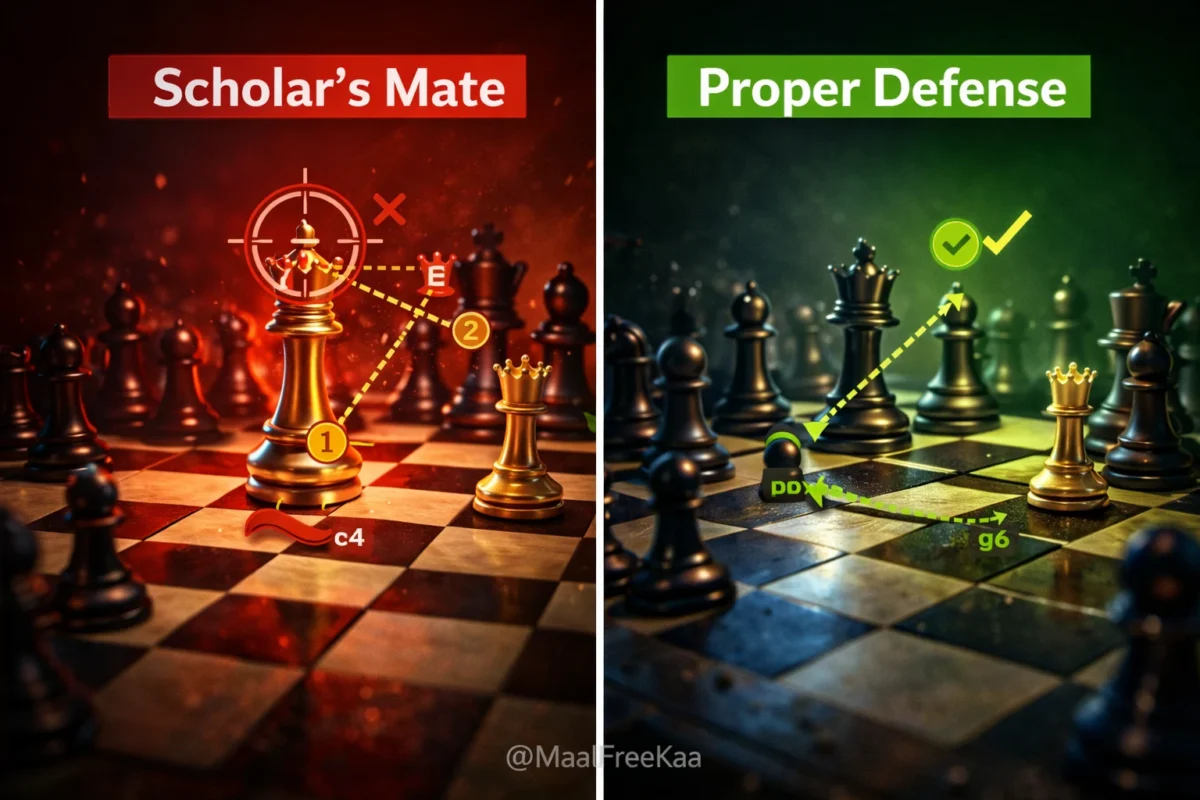
How to Win Chess in 4 Moves Understand the Basics Chessboard
Before diving into the four-move strategy, ensure you have a solid grasp of the basics of chess. Familiarize yourself with the chessboard the unique moves of each piece and the rules governing the game.
Set Up the Chessboard For Win
- Position the Board: Place the chessboard so that each player has a white square on their right-hand side.
- Arrange the Pieces: Set up the pieces with the back row consisting of rooks, knights, bishops, the queen, and the king. The pawns form the front row.
Recognize the 4-Move Winning Strategy
Understanding the four-move checkmate involves recognizing the power of the queen and the vulnerability of the opponent’s king. This strategy is often referred to as the “Scholar’s Mate.”
With these steps, you’re well on your way to mastering the art of winning chess in just four moves. Remember, the key to success lies not just in the execution of the strategy but also in adaptability and continuous improvement. Happy checkmating! Know More about Chess
Can You Spot the Checkmate?
[Diagram position] What’s the winning move?
Q: Can you really win chess in 4 moves?A: Yes, using the Scholar's Mate pattern targeting the f7 square, but it only works against inexperienced players who don't know the defense.
Q: Is the 4-move checkmate legal?A: Absolutely! It's a legitimate checkmating pattern, though considered a "trick" that rarely works against knowledgeable opponents.
How do you win chess in four moves?Use Scholar’s Mate:
e4
Bc4
Qh5
Qxf7#
Only if Black fails to defend.
Scholar’s Mate is one of the fastest beginner checkmates.

MaalFreeKaa is a veteran deal hunter and India’s original freebie expert. Since 2011, MaalFreeKaa has been dedicated to finding genuinely verified free samples, hidden loot deals, and daily quiz answers before anyone else. With a 14-year track record of providing “Real User Proof,” we simplify the search for online rewards and smartphones giveaways. Join thousands of daily winners who rely on our expertise to save money and win big every single day.